
- High-Performance Doors
-
- Applications
-
-
-
- Clean Room
Stainless steel or composite materials help maintain clean rooms.
-
-
- Coolers
Quick opening speeds & tight seals for temperature control.
-
-
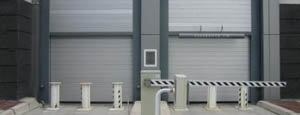
- Parking
Improve security & traffic flow and enhance architectural style.
-
-
- Hurricane Zone
Withstand winds up to 175 mph and comply with the Florida Building Code.
-
-
-
-
- USDA / FDA / cGMP
Increase productivity & address stringent USDA, FDA & cGMP requirements.
-
-
- Freezers
High-speed & perimeter seals minimize the air exchange between areas.
-
-
- Security
High speed & durability ensure secure access.
-
-
- Ventilation
Perforated or screen door panels allow improved air circulation.
-
-
-
-
- Fire Station Emergency Response
When time is of the essence, high speed and reliability are crucial.
-
-
- Warehousing
Fast cycle times and secure seals keep environments separated.
-
-
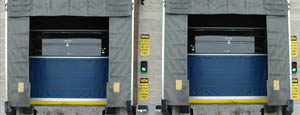
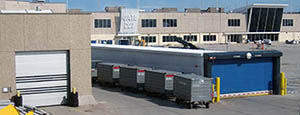
- Loading Dock
Rugged design & secure seal for oversized openings.
-
-
- Large Openings
Break-away functionality with rugged design seals oversized openings.
-
-
-
-
- Heavy Equipment
Withstands challenges of heavy equipment and fleet truck/car wash environments.
-
-
- Self-Storage
Fast opening speeds and reliable, durable construction keep facilities secure and protected.
-
-
- Industries
-
-
-
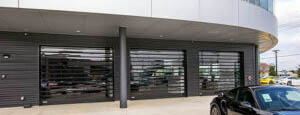
- Automotive Dealerships
Reduce energy costs, increase productivity and comfort and enhance customer perception.
-
-
- Cold Storage & Processing
Increase productivity and operational efficiency while reducing energy and maintenance costs.
-
-
- Parking
We offer solutions for Apartment / Condo & Loft, Standalone Parking Facilities and Office Buildings
-
-
-
-
- Food & Beverage
Doors specifically engineered for USDA/FDA and cGMP environments, and assured compliance for uncompromising performance.
-
-
- Mfg/Dist/Warehousing
A complete product line allows facilities to increase efficiency and safety and reduce maintenance and energy costs.
-
-
- Government
Ensure effective security and environmental controls are maintained for critical government operations.
-
-
-
-
- Transit
Keep operations running smoothly and efficient while reducing energy and maintenance costs.
-
-
- Pharma, Nutraceutical & Biotech
Doors that offer quick, secure access, environmental control and reliability for life science facilities.
-
-
- Support Resources
- Parts
- Contact Us
- Blog/News
- Why Rytec
- Sales Rep Locator
- Careers
- Dealers
- Architectural Resources


















2026 Best Medium Voltage Drives for Global Buyers
Choosing the right medium voltage drive in 2026 requires more than comparing voltage ratings or catalog efficiency.
Global buyers face different grid conditions, operating environments, and service capabilities. A 3.3 kV drive may suit a compact pump station. A 6.6 kV or 10 kV system may better serve a large mining conveyor or refinery compressor. The correct choice depends on motor size, load profile, harmonics, cooling design, and maintenance access.
Professor Leon M. Tolbert, a recognized researcher in multilevel converters and medium-voltage applications, has stated, “The main advantage of multilevel converters is their ability to synthesize high-voltage waveforms with lower voltage steps.” This principle remains important when buyers evaluate waveform quality, motor insulation stress, and system efficiency. It also shows why technical architecture matters more than marketing claims.
This guide reviews the 2026 best medium voltage drives for global buyers through practical selection criteria. These include regenerative capability, input harmonic performance, enclosure protection, bypass arrangements, cybersecurity, spare-parts support, and commissioning expertise. A reliable supplier should provide tested performance data, clear installation requirements, and documented service procedures. Site references matter, especially for continuous-duty applications.
There is no universal winner.
A drive that performs well in a dry coastal plant may struggle in a dusty inland facility. Some published efficiency figures also depend on carefully controlled conditions. Buyers should question incomplete data and request application-specific evidence. The strongest decision combines engineering judgment, verified documentation, lifecycle cost, and realistic local support.
Table of Contents [Hide]
What Medium Voltage Drives Are and Why They Matter in 2026
Medium voltage drives control motor speed and torque in demanding industrial systems. They typically serve motors above 1 kV, including pumps, fans, compressors, conveyors, and mills. Unlike low-voltage drives, they handle higher power with reduced current and smaller cable losses.
Their importance is growing in 2026. The IEA’s Electricity 2024 report forecasts average global electricity demand growth of about 4% annually from 2024 to 2026. This pressure makes efficient motor control increasingly valuable. The U.S. Department of Energy also identifies motor systems as major industrial energy users. A properly applied drive can reduce throttling losses, improve process stability, and limit mechanical stress. Field audits often reveal avoidable savings, but real performance depends on load patterns, harmonics, and maintenance quality. Bigger is not always better.
Tip: Check the motor’s starting profile, duty cycle, ambient temperature, and fault level before comparing prices. Ask for measured efficiency data, not only catalog ratings. Keep spare cooling fans and control components available.
Buyers should also review compliance with IEC 61800 requirements and local grid rules. Harmonic mitigation may require an active front end, filters, or a suitable transformer arrangement. The Global Wind Energy Council’s Global Wind Report 2025 shows continued expansion in renewable generation, creating more demanding applications for medium voltage motor control. However, renewable projects may operate under unstable supply conditions. A drive selected only for rated power can disappoint. Site testing, protection coordination, cybersecurity reviews, and documented commissioning deserve equal attention.