
- High-Performance Doors
-
- Applications
-
-
-
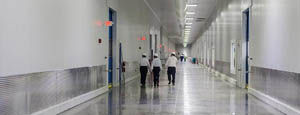
- Clean Room
Stainless steel or composite materials help maintain clean rooms.
-
-
- Coolers
Quick opening speeds & tight seals for temperature control.
-
-
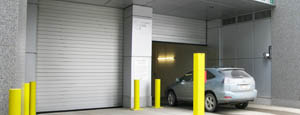
- Parking
Improve security & traffic flow and enhance architectural style.
-
-
- Hurricane Zone
Withstand winds up to 175 mph and comply with the Florida Building Code.
-
-
-
-
- USDA / FDA / cGMP
Increase productivity & address stringent USDA, FDA & cGMP requirements.
-
-
- Freezers
High-speed & perimeter seals minimize the air exchange between areas.
-
-
- Security
High speed & durability ensure secure access.
-
-
- Ventilation
Perforated or screen door panels allow improved air circulation.
-
-
-
-
- Fire Station Emergency Response
When time is of the essence, high speed and reliability are crucial.
-
-
- Warehousing
Fast cycle times and secure seals keep environments separated.
-
-
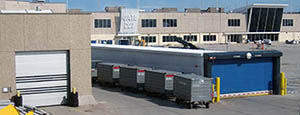
- Loading Dock
Rugged design & secure seal for oversized openings.
-
-
- Large Openings
Break-away functionality with rugged design seals oversized openings.
-
-
-
-
- Heavy Equipment
Withstands challenges of heavy equipment and fleet truck/car wash environments.
-
-
- Self-Storage
Fast opening speeds and reliable, durable construction keep facilities secure and protected.
-
-
- Industries
-
-
-
- Automotive Dealerships
Reduce energy costs, increase productivity and comfort and enhance customer perception.
-
-
- Cold Storage & Processing
Increase productivity and operational efficiency while reducing energy and maintenance costs.
-
-
- Parking
We offer solutions for Apartment / Condo & Loft, Standalone Parking Facilities and Office Buildings
-
-
-
-
- Food & Beverage
Doors specifically engineered for USDA/FDA and cGMP environments, and assured compliance for uncompromising performance.
-
-
- Mfg/Dist/Warehousing
A complete product line allows facilities to increase efficiency and safety and reduce maintenance and energy costs.
-
-
- Government
Ensure effective security and environmental controls are maintained for critical government operations.
-
-
-
-
- Transit
Keep operations running smoothly and efficient while reducing energy and maintenance costs.
-
-
- Pharma, Nutraceutical & Biotech
Doors that offer quick, secure access, environmental control and reliability for life science facilities.
-
-
- Support Resources
- Parts
- Contact Us
- Blog/News
- Why Rytec
- Sales Rep Locator
- Careers
- Dealers
- Architectural Resources



















2026 Best Types of Science Museum Exhibits for Buyers?
Choosing the right Science Museum Exhibits in 2026 requires more than attractive displays and impressive technology. Buyers must consider visitor age, learning goals, available floor space, maintenance needs, and long-term educational value. A glowing planetarium wall may attract crowds, but a durable hands-on physics station can create deeper engagement.
This guide explores the best exhibit types for museums, schools, discovery centers, and public learning spaces. It considers interactive science stations, immersive projection rooms, robotics displays, environmental galleries, medical technology exhibits, and adaptable traveling installations. Each option offers different benefits. Some encourage independent discovery, while others support guided demonstrations and group learning.
Practical experience matters. Staff should test controls, observe visitor behavior, and inspect cleaning requirements before purchase. Reliable suppliers should provide safety documentation, installation support, training, and measurable learning objectives. Accessibility also deserves serious attention, including readable labels, reachable controls, audio guidance, and calm alternatives for sensitive visitors.
No exhibit is perfect. Even advanced systems can become outdated or difficult to repair. A beautiful installation may also produce limited learning if visitors only press buttons. Buyers should question bold claims and request evidence from comparable museums. Budget pressure can distort decisions. Still, a carefully selected exhibit can turn complex ideas into memorable experiences, such as watching a robotic arm sort objects or tracking local air quality on a live display. The strongest choices balance wonder, accuracy, durability, and honest evaluation.
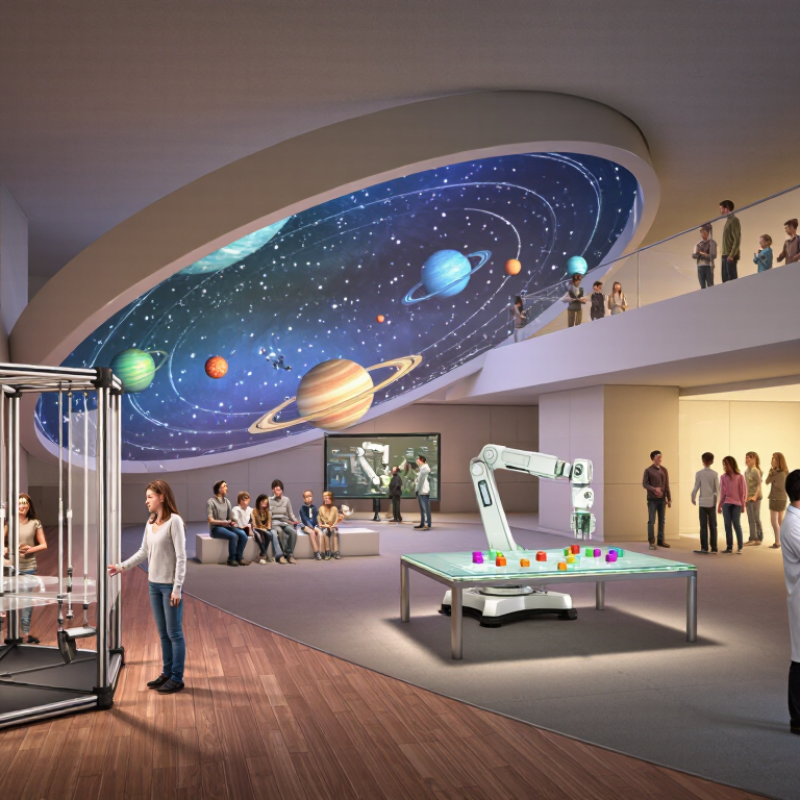
Table of Contents [Hide]
Science Museum Exhibits: Definition, Purpose, and Main Categories
A science museum exhibit is a designed environment that helps visitors explore scientific ideas through objects, models, experiments, or digital media. It is more than decoration behind glass. A useful exhibit connects evidence with curiosity. Visitors should see, touch, compare, question, and sometimes make mistakes safely.
Its purpose is to turn complex knowledge into observable experiences. A child may adjust a light source and watch shadows change. An adult may examine a geological sample beside a clear diagram. Effective exhibits support informal learning, encourage conversation, and respect different ages and abilities. Reliable planning includes input from scientists, educators, designers, and maintenance staff. Visitor testing matters too. A beautiful display can still confuse people.
Main categories include physical science, life science, Earth and space science, engineering, environmental science, and immersive digital learning.
Physical science Physical science exhibits may demonstrate sound, motion, energy, or magnetism.
Life science Life science displays often use models, specimens, and interactive anatomy tools.
Earth and space science Earth and space exhibits can feature fossils, weather systems, planets, or satellite data.
Engineering Engineering exhibits invite visitors to build, balance, or solve a design problem.
Environmental science Environmental exhibits connect local water, soil, climate, and conservation.
Immersive digital learning Digital exhibits add simulation, but screens should not replace meaningful objects.
A common mistake is choosing technology before defining the learning goal. Some exhibits also need revision after opening. Visitor behavior reveals weaknesses that drawings cannot.