
- High-Performance Doors
-
- Applications
-
-
-
- Clean Room
Stainless steel or composite materials help maintain clean rooms.
-
-
- Coolers
Quick opening speeds & tight seals for temperature control.
-
-
- Parking
Improve security & traffic flow and enhance architectural style.
-
-
- Hurricane Zone
Withstand winds up to 175 mph and comply with the Florida Building Code.
-
-
-
-
- USDA / FDA / cGMP
Increase productivity & address stringent USDA, FDA & cGMP requirements.
-
-
- Freezers
High-speed & perimeter seals minimize the air exchange between areas.
-
-
- Security
High speed & durability ensure secure access.
-
-
- Ventilation
Perforated or screen door panels allow improved air circulation.
-
-
-
-
- Fire Station Emergency Response
When time is of the essence, high speed and reliability are crucial.
-
-
- Warehousing
Fast cycle times and secure seals keep environments separated.
-
-
- Loading Dock
Rugged design & secure seal for oversized openings.
-
-
- Large Openings
Break-away functionality with rugged design seals oversized openings.
-
-
-
-
- Heavy Equipment
Withstands challenges of heavy equipment and fleet truck/car wash environments.
-
-
- Self-Storage
Fast opening speeds and reliable, durable construction keep facilities secure and protected.
-
-
- Industries
-
-
-
- Automotive Dealerships
Reduce energy costs, increase productivity and comfort and enhance customer perception.
-
-
- Cold Storage & Processing
Increase productivity and operational efficiency while reducing energy and maintenance costs.
-
-
- Parking
We offer solutions for Apartment / Condo & Loft, Standalone Parking Facilities and Office Buildings
-
-
-
-
- Food & Beverage
Doors specifically engineered for USDA/FDA and cGMP environments, and assured compliance for uncompromising performance.
-
-
- Mfg/Dist/Warehousing
A complete product line allows facilities to increase efficiency and safety and reduce maintenance and energy costs.
-
-
- Government
Ensure effective security and environmental controls are maintained for critical government operations.
-
-
-
-
- Transit
Keep operations running smoothly and efficient while reducing energy and maintenance costs.
-
-
- Pharma, Nutraceutical & Biotech
Doors that offer quick, secure access, environmental control and reliability for life science facilities.
-
-
- Support Resources
- Parts
- Contact Us
- Blog/News
- Why Rytec
- Sales Rep Locator
- Careers
- Dealers
- Architectural Resources























What Is a Cannabis Gummies Container for Global Buyers?
For global buyers, a Cannabis Gummies Container is more than a small package. It protects product quality, supports clear communication, and influences purchasing confidence. The right container should fit the product, market, and approved supply chain. It must also respect local packaging requirements wherever the product is legally permitted.
A professional evaluation starts with material safety, closure performance, and labeling space. Glass can provide strong barrier protection and a premium appearance. Food-grade plastic may reduce weight and shipping costs. Child-resistant and tamper-evident features may be required in specific markets. Buyers should verify these requirements with local authorities and qualified compliance specialists. Do not rely on one global assumption.
Details matter. A secure lid should close evenly, without loose threads or visible gaps. A label should remain readable after handling, transport, and storage. Moisture resistance can help protect gummy texture, although performance depends on the formula and environment. Suppliers should provide material specifications, test records, and consistent production samples. Experience helps reveal problems that product photos often hide.
There is no perfect container.
A practical comparison should consider capacity, filling efficiency, shipping durability, recyclability, and total cost. Some attractive designs waste shelf space. Others look economical but create labeling difficulties. These trade-offs deserve honest review. Buyers can request samples, inspect closures by hand, and test containers under realistic storage conditions. This approach supports reliable decisions and reduces avoidable packaging changes. A well-chosen Cannabis Gummies Container should serve safety, compliance, brand presentation, and long-term market needs.
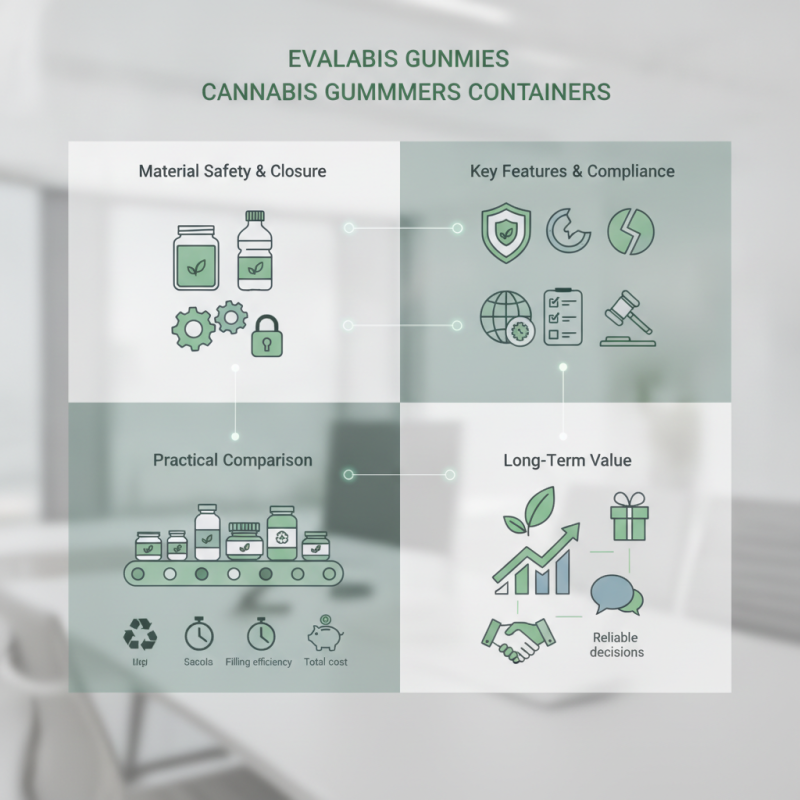
Table of Contents [Hide]
Definition and Purpose of a Cannabis Gummies Container
A cannabis gummies container is a purpose-built package for storing and presenting legally manufactured gummy products in regulated markets. Its main purpose is protection. It helps reduce exposure to moisture, light, heat, and accidental contamination during storage and transport. A suitable container may include child-resistant features, a tamper-evident seal, and an opaque body. These details matter because gummies can soften, stick together, or lose quality when conditions change.
The container also supports clear communication. A clean label area should hold essential information, such as product identity, ingredients, net weight, batch details, and lawful use instructions. Requirements differ between countries and regions. Global buyers should confirm local packaging rules before selecting a design. In practical sourcing work, small details often create problems. A lid may close tightly but still be difficult for older adults to use. A seal may look secure yet fail during rough shipping. No container is perfect.
Tips: Ask for material specifications, closure testing, and sample units before placing a large order. Check whether the container protects against moisture and light. Review label space with a compliance professional. Avoid decorative features that reduce readability or raise opening risks. A simple package can be more reliable.