
- High-Performance Doors
-
- Applications
-
-
-
- Clean Room
Stainless steel or composite materials help maintain clean rooms.
-
-
- Coolers
Quick opening speeds & tight seals for temperature control.
-
-
- Parking
Improve security & traffic flow and enhance architectural style.
-
-
- Hurricane Zone
Withstand winds up to 175 mph and comply with the Florida Building Code.
-
-
-
-
- USDA / FDA / cGMP
Increase productivity & address stringent USDA, FDA & cGMP requirements.
-
-
- Freezers
High-speed & perimeter seals minimize the air exchange between areas.
-
-
- Security
High speed & durability ensure secure access.
-
-
- Ventilation
Perforated or screen door panels allow improved air circulation.
-
-
-
-
- Fire Station Emergency Response
When time is of the essence, high speed and reliability are crucial.
-
-
- Warehousing
Fast cycle times and secure seals keep environments separated.
-
-
- Loading Dock
Rugged design & secure seal for oversized openings.
-
-
- Large Openings
Break-away functionality with rugged design seals oversized openings.
-
-
-
-
- Heavy Equipment
Withstands challenges of heavy equipment and fleet truck/car wash environments.
-
-
- Self-Storage
Fast opening speeds and reliable, durable construction keep facilities secure and protected.
-
-
- Industries
-
-
-
- Automotive Dealerships
Reduce energy costs, increase productivity and comfort and enhance customer perception.
-
-
- Cold Storage & Processing
Increase productivity and operational efficiency while reducing energy and maintenance costs.
-
-
- Parking
We offer solutions for Apartment / Condo & Loft, Standalone Parking Facilities and Office Buildings
-
-
-
-
- Food & Beverage
Doors specifically engineered for USDA/FDA and cGMP environments, and assured compliance for uncompromising performance.
-
-
- Mfg/Dist/Warehousing
A complete product line allows facilities to increase efficiency and safety and reduce maintenance and energy costs.
-
-
- Government
Ensure effective security and environmental controls are maintained for critical government operations.
-
-
-
-
- Transit
Keep operations running smoothly and efficient while reducing energy and maintenance costs.
-
-
- Pharma, Nutraceutical & Biotech
Doors that offer quick, secure access, environmental control and reliability for life science facilities.
-
-
- Support Resources
- Parts
- Contact Us
- Blog/News
- Why Rytec
- Sales Rep Locator
- Careers
- Dealers
- Architectural Resources




















How to Choose GRP Gutters Machinery for Global Buyers
Choosing Grp Gutters Machinery is not simply a price comparison. Global buyers must match equipment capability with local production realities, customer expectations, and long-term service access.
Daniel Hart, a composite manufacturing consultant with experience in pultrusion projects, says, “The best gutter machine is not the fastest machine; it is the one that repeats quality every day.” His view reflects a practical concern. A line may promise high output, yet unstable resin control can create weak corners, surface bubbles, or uneven wall thickness. Those defects become expensive after installation.
Buyers should examine the complete production system. Review the puller’s traction, die temperature control, cutting accuracy, curing arrangement, and profile changeover time. Ask for sample gutters made with the intended resin, glass reinforcement, and dimensions. Look closely at the edges. Check the drainage channel. Small flaws matter.
Supplier experience also deserves attention. Can the manufacturer provide commissioning support across borders? Are manuals clear? Can critical heaters, sensors, and cutting blades arrive quickly? These questions often matter more than an impressive brochure. Energy use, operator training, factory space, and maintenance costs should enter the calculation.
A lower purchase price can mislead.
The cheapest option may require frequent adjustments. It may also depend on one distant technician. That risk is easy to underestimate. Still, not every premium machine is automatically suitable. Buyers should challenge technical claims, request performance records, and compare total ownership costs. Reliable Grp Gutters Machinery should support stable profiles, predictable output, safe operation, and measurable quality. That standard is demanding, but global production rarely rewards vague decisions.
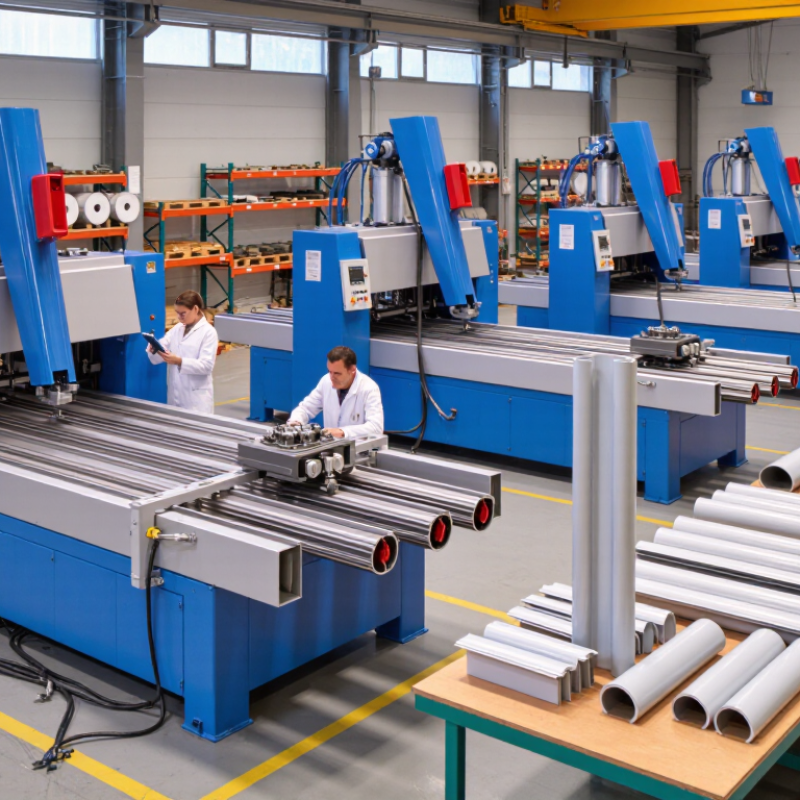
Table of Contents [Hide]
GRP Gutter Machinery: Definition, Purpose, and Main Applications
How to Choose GRP Gutters Machinery for Global Buyers
GRP gutter machinery produces gutters from glass-reinforced plastic, also called fiberglass-reinforced polymer. The equipment combines resin, glass fibers, heat, pressure, and controlled shaping. It may include feeding units, forming molds, curing sections, cutting tools, and inspection stations. GRP gutters are lightweight, corrosion-resistant, and suitable for demanding drainage environments.
The main purpose is consistent production. A reliable line keeps gutter dimensions stable across long production runs. It also reduces manual trimming and material waste. Common applications include factories, warehouses, agricultural buildings, residential projects, and infrastructure sites.
Chemical exposure and coastal air can challenge ordinary metal gutters. GRP systems often perform better in these conditions, but resin selection still matters. A poorly matched formula can cause brittleness, surface bubbles, or uneven curing.
Tips: Check mold compatibility, hourly output, power requirements, and operator controls before buying. Ask for sample gutters made with your intended resin and glass content. Confirm local voltage, spare-part availability, safety protection, and remote technical support. Experienced buyers also inspect cut edges and drainage joints, not only machine speed. A fast line is not always an efficient line. Sometimes, a simpler machine gives better results because workers can adjust it easily. I would also leave room for process testing; actual factory humidity may change curing performance.