
- High-Performance Doors
-
- Applications
-
-
-
- Clean Room
Stainless steel or composite materials help maintain clean rooms.
-
-
- Coolers
Quick opening speeds & tight seals for temperature control.
-
-
- Parking
Improve security & traffic flow and enhance architectural style.
-
-
- Hurricane Zone
Withstand winds up to 175 mph and comply with the Florida Building Code.
-
-
-
-
- USDA / FDA / cGMP
Increase productivity & address stringent USDA, FDA & cGMP requirements.
-
-
- Freezers
High-speed & perimeter seals minimize the air exchange between areas.
-
-
- Security
High speed & durability ensure secure access.
-
-
- Ventilation
Perforated or screen door panels allow improved air circulation.
-
-
-
-
- Fire Station Emergency Response
When time is of the essence, high speed and reliability are crucial.
-
-
- Warehousing
Fast cycle times and secure seals keep environments separated.
-
-
- Loading Dock
Rugged design & secure seal for oversized openings.
-
-
- Large Openings
Break-away functionality with rugged design seals oversized openings.
-
-
-
-
- Heavy Equipment
Withstands challenges of heavy equipment and fleet truck/car wash environments.
-
-
- Self-Storage
Fast opening speeds and reliable, durable construction keep facilities secure and protected.
-
-
- Industries
-
-
-
- Automotive Dealerships
Reduce energy costs, increase productivity and comfort and enhance customer perception.
-
-
- Cold Storage & Processing
Increase productivity and operational efficiency while reducing energy and maintenance costs.
-
-
- Parking
We offer solutions for Apartment / Condo & Loft, Standalone Parking Facilities and Office Buildings
-
-
-
-
- Food & Beverage
Doors specifically engineered for USDA/FDA and cGMP environments, and assured compliance for uncompromising performance.
-
-
- Mfg/Dist/Warehousing
A complete product line allows facilities to increase efficiency and safety and reduce maintenance and energy costs.
-
-
- Government
Ensure effective security and environmental controls are maintained for critical government operations.
-
-
-
-
- Transit
Keep operations running smoothly and efficient while reducing energy and maintenance costs.
-
-
- Pharma, Nutraceutical & Biotech
Doors that offer quick, secure access, environmental control and reliability for life science facilities.
-
-
- Support Resources
- Parts
- Contact Us
- Blog/News
- Why Rytec
- Sales Rep Locator
- Careers
- Dealers
- Architectural Resources





















What Is Custom Stainless Steel Coil and How Is It Used?
Custom Stainless Steel Coil is not simply stainless steel rolled into a convenient package. It is a material solution designed around a buyer’s exact production needs. Grade, thickness, width, surface finish, edge condition, coil weight, and delivery tolerance all matter. A 304 coil may suit kitchen equipment, while 316L is often chosen for marine or chemical environments. The difference can become visible as stains, cracks, or premature replacement.
Harry Brearley, the British metallurgist credited with developing stainless steel, wrote, “I have never thought that I discovered stainless steel. I have always considered that I discovered the practical application of stainless steel.” His observation remains relevant. Custom Stainless Steel Coil creates value through application, not appearance alone. A 2B finish may support practical forming, while a bright-annealed surface can improve the visual quality of decorative panels. Slit edges may fit a stamping line better than standard mill edges.
Small details matter.
Manufacturers may anneal, pickle, level, slit, or polish the coil before shipment. They can also provide heat numbers, inspection records, and dimensional reports for stronger traceability. These documents help engineers confirm that the delivered coil matches the approved specification.
Still, a perfect specification can fail when the real service environment is misunderstood. Humidity, chlorides, forming stress, and cleaning chemicals deserve careful review. Experienced buyers sometimes focus too heavily on price. That choice can create hidden costs later. This guide explains how Custom Stainless Steel Coil is produced, selected, and used across fabrication, construction, transportation, food processing, and precision manufacturing.
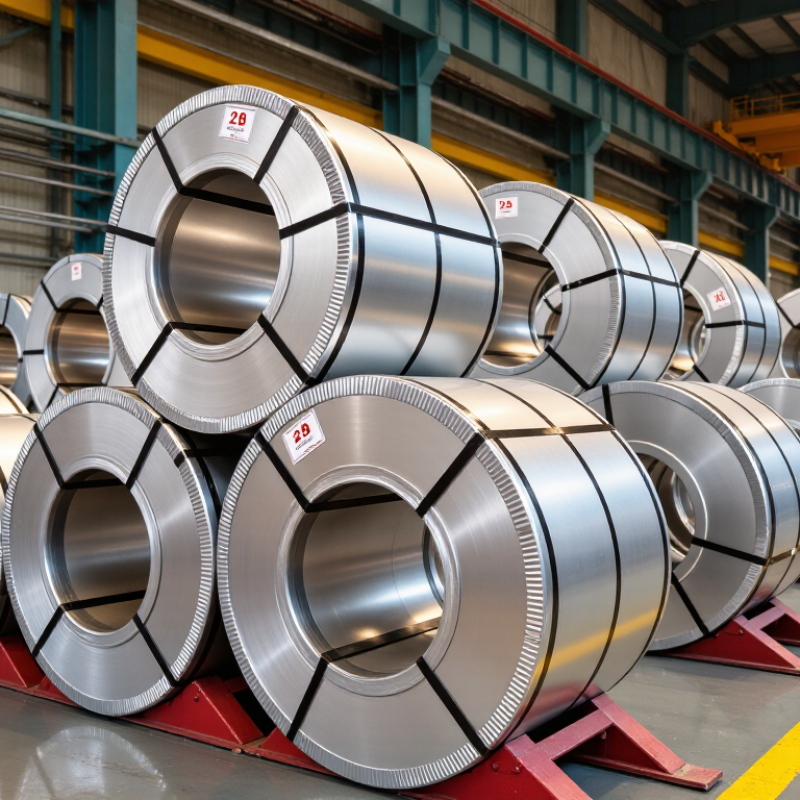
Table of Contents [Hide]
What Is Custom Stainless Steel Coil? Grades, Forms, and ASTM Standards
Custom stainless steel coil is flat-rolled stainless steel produced to specified thickness, width, edge condition, finish, and temper. It may arrive in a wide master coil or narrow slit strips. A fabrication engineer may request 0.8 mm thickness, 120 mm width, deburred edges, and a satin surface for formed panels.
Grade selection depends on the working environment. Grade 304 offers strong general corrosion resistance for kitchen equipment, enclosures, and indoor fabrication. Grade 316L performs better around chlorides, moisture, and marine exposure because of its molybdenum content. Grade 430 is magnetic and often suits decorative parts and appliances. Duplex grades provide higher strength, but forming requires tighter process control. The attractive grade is not always the practical one.
ASTM A480 defines general requirements for flat-rolled stainless products, including dimensions, tolerances, and surface conditions. ASTM A240 covers stainless plate, sheet, and strip used in many industrial applications. ASTM A666 addresses annealed or cold-worked austenitic stainless sheet and strip. These standards help buyers compare heat numbers, mechanical properties, chemical composition, and test results. A mill test certificate should match the purchase specification. Small details matter. A coil can meet its grade requirement yet fail a forming trial because of unsuitable hardness, edge quality, or surface marks. Personally, I would verify the final bend radius before approving a large production run.