Top Folding Doors for Global Buyers How to Choose?

Buying folding doors across borders looks simple until measurements, weather, and installation conditions disagree. A catalog photograph cannot show frame tolerances, roller resistance, or seal performance. Experienced buyers compare these details before comparing prices. They also ask how the doors performed in similar climates. That question matters. A coastal hotel needs different protection from a dry inland showroom. This guide introduces practical ways to evaluate folding doors, from opening size and panel weight to thermal comfort and daily operation.

Reliable selection begins with verified information. Request technical drawings, material grades, hardware specifications, warranty terms, and recent project references. Samples help, but a small sample cannot reveal full-system movement or long-term drainage. That limitation deserves attention. Check whether suppliers use documented quality controls and whether independent testing supports their claims. Confirm installation guidance, packaging methods, spare-part availability, and after-sales response times. Global projects often fail through coordination, not product quality. A door may be excellent, yet unsuitable for local builders or unfamiliar site conditions.

The right comparison also considers wind exposure, rain, sunlight, acoustic needs, accessibility, and cleaning routines. Ask how panels stack, how much threshold space is required, and what happens after repeated use. Simple questions expose hidden costs. Do not treat every certification as universal; verify acceptance with qualified local professionals and project authorities. No buying guide removes every uncertainty. Still, careful evidence, realistic testing, and honest supplier communication can reduce costly surprises. The best choice is not always the cheapest door, but the system that remains dependable after installation.
Top Folding Doors for Global Buyers How to Choose?

What Are Folding Doors and Why Do Global Buyers Choose Them?

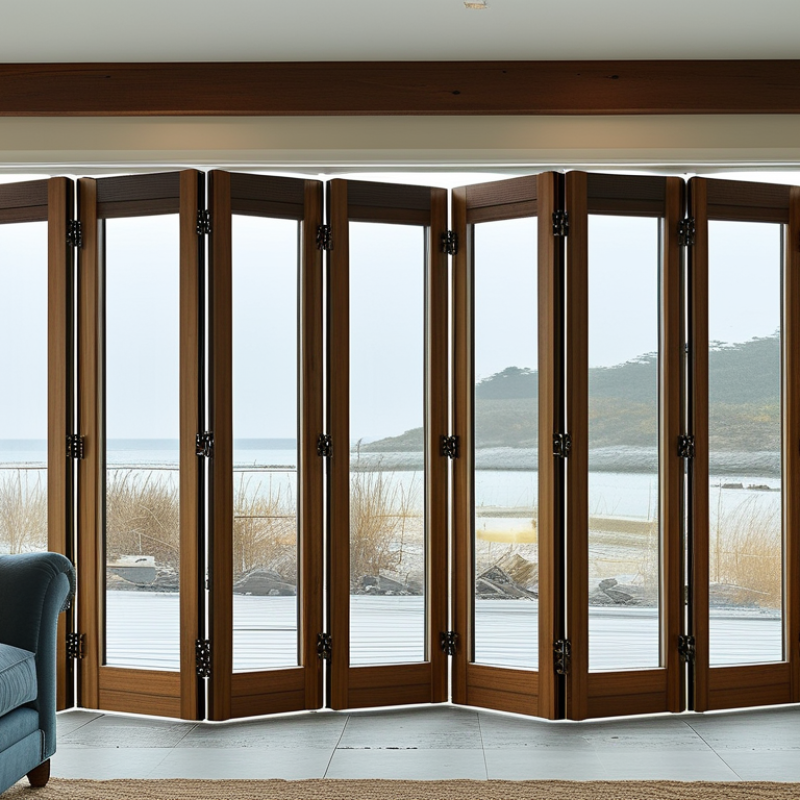
A folding door is a system of hinged panels that opens by stacking sections beside an opening. Unlike a sliding door, it needs less wall space for storage. The panels travel along a top track, while rollers support smooth movement. Some designs include a daily-use passage panel. This feature helps families avoid opening the entire system.

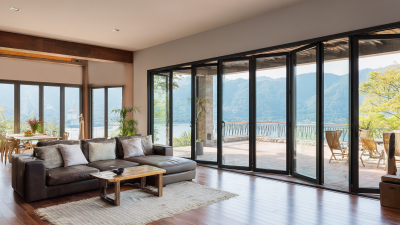
Global buyers often choose folding doors for wider views, fresh air, and flexible room layouts. A dining area can open toward a garden in seconds. In a coastal home, large glass panels can frame morning light and moving water. In a small apartment, the same door can separate a kitchen without creating a heavy visual barrier. The effect feels practical, not merely decorative.

Performance depends on details. Check the panel weight, hardware material, drainage design, glass specification, and available thermal data. A strong-looking frame may still perform poorly if installation is inaccurate.

I once underestimated the effect of an uneven floor; the door operated well in the showroom but dragged after fitting. That mistake changed my inspection routine. Measure the opening in several places, confirm wind exposure, and ask for maintenance instructions. Test the handle, rollers, seals, and locking points before shipment. Keep expectations realistic. More panels do not always mean a better view, because extra joints can increase cleaning and adjustment work.

Which Folding Door Types, Materials, and Designs Fit Different Projects?

For global projects, folding door selection should begin with movement, climate, and opening width. Bi-fold systems suit patios, cafés, and luxury residential rooms requiring a wide clear opening. Multi-panel folding doors handle larger elevations but need stronger tracks and careful structural coordination. Accordion-style doors work well for retail interiors and temporary partitions, although their seals and acoustic performance may be limited. Think beyond appearance.

Material choice changes performance. Thermally broken aluminum offers slim profiles, corrosion resistance, and reliable operation in humid coastal areas. uPVC can provide stronger insulation at a lower cost, but its wider frames may reduce daylight. Timber adds warmth and suits hospitality or heritage-inspired interiors, yet it needs regular finishing in wet climates. Fiberglass is stable and durable, though local supply can be inconsistent. The U.S. Department of Energy reports that windows can represent 25–30% of household heating and cooling energy use, so glazing, weather seals, and frame design deserve serious testing.

Project design also depends on wind exposure, drainage, accessibility, and maintenance access. The IEA and UNEP’s 2023 Global Status Report states that buildings consume about 30% of global final energy. Low-emissivity glass, insulated frames, and external shading can reduce operational demand. A south-facing opening may need solar control, while a cold-climate project may require triple glazing. Measure twice. In practice, buyers sometimes specify oversized panels before checking floor deflection or hardware limits. That mistake is expensive, and attractive renderings rarely reveal it. Performance certificates, tested air infiltration, and documented installation procedures offer more dependable evidence than appearance alone.

How to Compare Folding Door Quality, Performance, and Safety Features?

Choosing folding doors for global projects requires more than comparing prices. I inspect them like a site installer, not a catalog reader. Start with the frame, hinges, rollers, seals, and locking points. Aluminum should feel rigid, while reinforced profiles resist twisting during repeated use. Check corner joints closely. Uneven gaps often reveal weak assembly or poor quality control. Ask for material specifications, load ratings, and independent test reports. These documents make supplier claims easier to verify.

Performance depends on the opening itself. Measure the width, height, floor level, wind exposure, and expected traffic. A door that glides smoothly in a showroom may struggle on an uneven threshold. Test several cycles. Then operate it slowly by hand. Listen for scraping, clicking, or sudden resistance. Good rollers distribute weight and remain stable when panels fold together. Weather seals should compress evenly, without forcing the handle. Thermal performance also matters in hot or cold regions, especially around glass edges. Small installation errors can defeat expensive materials.

Safety deserves attention. Look for finger protection, secure stops, anti-drop hardware, and panels that cannot swing unexpectedly. Glass should be safety-rated and clearly identified in the product documentation. Confirm emergency opening methods where public access is expected. Compliance marks are useful, but they are not proof of perfect installation. I have seen well-made doors perform badly after rushed alignment. That is uncomfortable. Recheck fasteners after early use, and record maintenance findings. A clear warranty, spare-part plan, and responsive technical support show reliability beyond the showroom. No comparison is flawless; local climate and user habits can change the result.

Top Folding Doors for Global Buyers How to Choose? - How to Compare Folding Door Quality, Performance, and Safety Features?

Comparison Dimension Thermal-Break Aluminum uPVC Engineered Timber Aluminum-Clad Timber What Buyers Should Verify
Typical best use Large openings, modern façades, high-traffic areas Residential projects requiring low maintenance and cost efficiency Traditional or high-end residential interiors Premium projects needing interior timber appearance and exterior protection Climate, opening width, traffic level, and required appearance
Frame durability High; resistant to corrosion when correctly finished Good; may become more brittle with prolonged extreme heat or cold Good when sealed and maintained; sensitive to moisture if neglected High externally; timber still requires interior care Surface-treatment specification, warranty terms, and coastal corrosion suitability
Thermal performance Generally strong with thermal breaks and insulated glass Generally good because the frame has low thermal conductivity Naturally good; performance depends on frame depth and glazing Good to very good with a properly designed composite section Whole-door U-value, glazing U-value, spacer type, and local energy requirements
Common whole-door U-value range Approximately 1.4–2.2 W/m²K with insulated glazing Approximately 1.2–2.0 W/m²K with insulated glazing Approximately 1.0–1.8 W/m²K, depending on timber depth and glass Approximately 1.0–1.8 W/m²K, depending on the composite design Ask for tested or calculated whole-door values; lower U-values indicate better insulation
Air permeability Can achieve high performance with continuous seals and accurate installation Typically good when seals and corners are correctly manufactured Good when joints, seals, and surface coatings remain in condition Typically good; performance depends on both frame systems Test classification under EN 12207 or the applicable local standard
Water tightness Good to very good with correct drainage and threshold design Good when drainage paths are clear and installation is level Good with durable coatings and properly maintained seals Good to very good with a protected external skin and suitable drainage Water-tightness test pressure, drainage details, threshold height, and site exposure
Wind resistance Suitable for large panels when reinforced and correctly anchored Suitable for moderate exposures; larger openings may need reinforcement Good when engineered for the opening size and local wind load Good to very good with engineered frame and anchoring details Design wind pressure, panel width, mullion reinforcement, and anchorage calculations
Operating effort Low when panel weight, rollers, and hinges are correctly matched Low to moderate; oversized panels can increase operating force Moderate; heavier timber panels require quality hardware Moderate; depends on panel construction and hardware capacity Maximum panel weight, roller load rating, adjustment range, and cycle testing
Hardware service life High with stainless or corrosion-resistant components and regular adjustment Good with correctly rated rollers, hinges, and locking points Good with protected hardware and periodic maintenance High when the hardware is rated for the combined panel weight Material grade, replacement availability, adjustment instructions, and cycle-test results
Safety glazing options Tempered or laminated safety glass available Tempered or laminated safety glass available Tempered or laminated safety glass available Tempered or laminated safety glass available Use safety glass in doors and adjacent hazardous locations; verify applicable local code
Finger-trap protection Available through hinge guards, restricted gaps, or protective profiles Available through child-safe hardware and controlled hinge gaps Available through suitable hinge design and protective covers Available through engineered hinges and protective profiles Check hinge-side gap protection, anti-slam features, and child-safety requirements
Threshold accessibility Low or flush thresholds possible; drainage must be carefully designed Low thresholds possible; water management may require added detailing Low thresholds possible with appropriate sill protection Low thresholds possible; confirm compatibility between materials Threshold height, accessibility rules, drainage capacity, and weather exposure
Acoustic performance Moderate to good with laminated acoustic glass and sealed joints Moderate to good with suitable glazing and compression seals Good potential because of timber mass and tight construction Good potential with engineered frame and acoustic glazing Certified Rw or STC rating for the complete door, not only the glass
Maintenance demand Low; clean tracks, inspect seals, and adjust hardware periodically Low; clean drainage channels and lubricate or replace hardware as needed Moderate to high; coatings may require periodic renewal Moderate; exterior is low maintenance but interior timber needs care Maintenance schedule, spare-parts plan, cleaning method, and coating warranty
Typical cost position Mid-range to premium Economy to mid-range Mid-range to premium Premium Compare complete installed cost, glazing, hardware, freight, duties, and maintenance
Recommended quality evidence Independent performance tests, coating specification, section drawings Independent performance tests, profile reinforcement details, weld quality records Moisture-content control, coating system, joint construction, test reports Composite bonding details, moisture protection, coating specification, test reports Request project-specific drawings, certificates, installation instructions, and references
Buyer’s note: Performance ranges are typical market indications, not guaranteed product ratings. Actual results depend on door size, glazing, hardware, installation quality, climate, and local building regulations. Always compare independently tested whole-door performance rather than frame or glass values alone.

What Should Buyers Know About Sizes, Customization, and Installation?

Choosing a folding door begins with accurate measurements, not a catalog picture. Measure the opening at the top, middle, and bottom. Record width, height, wall thickness, and floor level. Small differences can affect panel movement. Allow space for the frame, seals, handles, and stacked panels. A door that fits one climate may perform differently elsewhere, especially where humidity or temperature changes are severe.

Customization should support daily use, not only appearance. Buyers can request panel numbers, opening direction, glazing type, thresholds, colors, and insect screens. Ask for clear drawings before production. Confirm the finished opening size, not only the nominal door size. I have seen attractive projects lose comfort because the threshold was too high or the panels were too heavy. That detail deserves more attention.

Tips: Check local building requirements and wind conditions. Confirm whether installation includes frame fixing, flashing, drainage, adjustment, and final sealing. Use an installer experienced with folding systems, and ask for a written installation method. Keep the floor level and protect the track from construction dust. Test every panel after installation. It should fold smoothly without scraping, binding, or unusual gaps. A perfect plan can still need adjustment on site. That is normal, but it should be recorded and corrected before handover.

Top Folding Doors for Global Buyers: How to Choose?

Minimum clear opening widths in selected accessibility regulations

How to use this information: Specify the required clear opening rather than relying only on the nominal folding-door or panel width. The clear opening must account for the track, pivots, hinges, seals, stacking configuration, and the door position when fully opened.

  • Sizes: Confirm the finished structural opening, ceiling height, floor level, and available stacking space before selecting the number and width of panels.
  • Customization: Ask the supplier to confirm the actual clear opening, panel weight, threshold height, drainage details, glazing configuration, and local wind-load requirements.
  • Installation: Ensure the head track is supported by a suitable structural member and that the opening is square, level, plumb, and accurately measured before fabrication.
  • Compliance: Local building and accessibility rules take priority. The chart compares selected requirements and is not a substitute for project-specific code review.

Data sources: U.S. Department of Justice, 2010 ADA Standards for Accessible Design, Section 404.2.3; UK Government, Approved Document M, Access to and use of buildings, Table 2. Values are shown in millimetres.

How to Evaluate Suppliers, Costs, Shipping, and After-Sales Support?

Choosing folding doors for international projects requires more than comparing product photos. Evaluate suppliers through factory experience, material specifications, production records, and independent customer feedback. Ask for drawings, load information, glass standards, finish samples, and installation guidance. A reliable supplier should explain limitations clearly, not promise everything. Request a sample before placing a large order. Small details matter.

Compare the complete cost, not only the unit price. Include hardware, packaging, customization, inland transport, export documents, insurance, duties, and local installation. A low quotation may exclude essential components. Shipping also needs careful review. Confirm carton dimensions, gross weight, loading methods, delivery terms, and estimated transit time. Check whether doors are protected against moisture, impact, and surface scratches. Delays happen. Your schedule should allow some space.

Tips: Use a written comparison sheet for every supplier. Ask who handles damaged goods during transit and how claims are documented. Confirm the warranty period, replacement-part availability, response time, and remote installation support. Test the supplier with practical questions before ordering. If answers remain vague, pause the purchase. I have found that clear communication often predicts smoother after-sales service, although it is not perfect evidence. Recheck every promise in the contract.