
- High-Performance Doors
-
- Applications
-
-
-
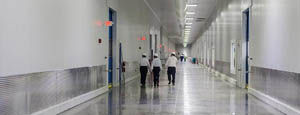
- Clean Room
Stainless steel or composite materials help maintain clean rooms.
-
-
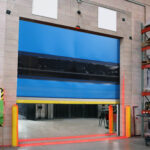
- Coolers
Quick opening speeds & tight seals for temperature control.
-
-
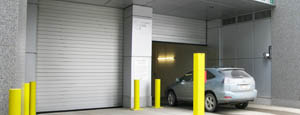
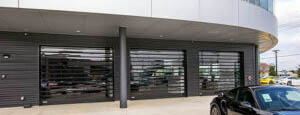
- Parking
Improve security & traffic flow and enhance architectural style.
-
-
- Hurricane Zone
Withstand winds up to 175 mph and comply with the Florida Building Code.
-
-
-
-
- USDA / FDA / cGMP
Increase productivity & address stringent USDA, FDA & cGMP requirements.
-
-
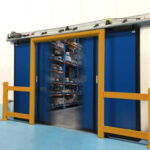
- Freezers
High-speed & perimeter seals minimize the air exchange between areas.
-
-
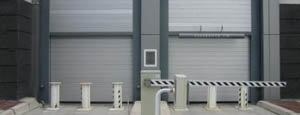
- Security
High speed & durability ensure secure access.
-
-
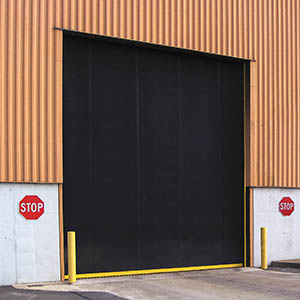
- Ventilation
Perforated or screen door panels allow improved air circulation.
-
-
-
-
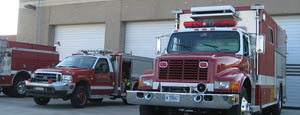
- Fire Station Emergency Response
When time is of the essence, high speed and reliability are crucial.
-
-
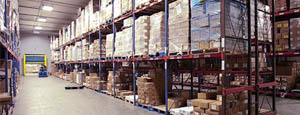
- Warehousing
Fast cycle times and secure seals keep environments separated.
-
-
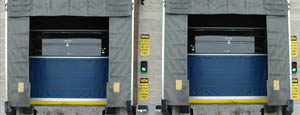
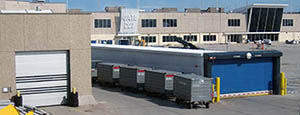
- Loading Dock
Rugged design & secure seal for oversized openings.
-
-
- Large Openings
Break-away functionality with rugged design seals oversized openings.
-
-
-
-
- Heavy Equipment
Withstands challenges of heavy equipment and fleet truck/car wash environments.
-
-
- Self-Storage
Fast opening speeds and reliable, durable construction keep facilities secure and protected.
-
-
- Industries
-
-
-
- Automotive Dealerships
Reduce energy costs, increase productivity and comfort and enhance customer perception.
-
-
- Cold Storage & Processing
Increase productivity and operational efficiency while reducing energy and maintenance costs.
-
-
- Parking
We offer solutions for Apartment / Condo & Loft, Standalone Parking Facilities and Office Buildings
-
-
-
-
- Food & Beverage
Doors specifically engineered for USDA/FDA and cGMP environments, and assured compliance for uncompromising performance.
-
-
- Mfg/Dist/Warehousing
A complete product line allows facilities to increase efficiency and safety and reduce maintenance and energy costs.
-
-
- Government
Ensure effective security and environmental controls are maintained for critical government operations.
-
-
-
-
- Transit
Keep operations running smoothly and efficient while reducing energy and maintenance costs.
-
-
- Pharma, Nutraceutical & Biotech
Doors that offer quick, secure access, environmental control and reliability for life science facilities.
-
-
- Support Resources
- Parts
- Contact Us
- Blog/News
- Why Rytec
- Sales Rep Locator
- Careers
- Dealers
- Architectural Resources














How to Choose an Air Circuit Breaker in 2026?
Choosing an Air Circuit Breaker in 2026 requires more than matching a rated current to a nameplate. It demands a clear view of the entire electrical system. Load type, fault level, voltage, frequency, enclosure conditions, and future expansion all influence the decision. A breaker that fits today may become restrictive after one production line is added.
Dr. John D. McDonald, an IEEE Fellow and power-system protection specialist, offers a useful principle: “Protection must be designed as a coordinated system, not as isolated equipment.” That perspective should guide every Air Circuit Breaker evaluation. Check the short-circuit rating, including Icu and Ics under IEC 60947-2. Review the trip unit’s long-time, short-time, instantaneous, and ground-fault settings. Confirm that selectivity works with upstream and downstream devices. A high interrupting rating alone does not guarantee dependable protection.
The installation environment matters too. Dust, heat, humidity, vibration, and limited ventilation can change performance. In a factory cabinet, even a small airflow problem may raise internal temperature. In a data center, unnecessary tripping can interrupt critical services. Maintenance access also deserves attention. A technically strong breaker becomes a poor choice if testing, spare parts, or trained support are unavailable.
There is no perfect selection.
Engineers sometimes overfocus on initial price. That is a mistake worth admitting. A lower-cost model may create higher downtime, replacement, and inspection costs later. This guide examines the practical criteria for selecting an Air Circuit Breaker in 2026, while recognizing that real projects often involve incomplete data, changing loads, and uncomfortable compromises.

Table of Contents [Hide]
What an Air Circuit Breaker Is and Where It Is Used
How to Choose an Air Circuit Breaker in 2026?
An air circuit breaker, or ACB, is a low-voltage protection device that uses air to extinguish an electrical arc. It normally protects high-current circuits, often from 630 amperes to several thousand amperes. Unlike a smaller molded-case breaker, an ACB usually includes adjustable electronic protection, visible isolation, and a draw-out mechanism.
It is commonly installed in main distribution boards, generator panels, transformer outputs, industrial plants, hospitals, data centers, and large commercial buildings. In these locations, one fault can interrupt an entire facility. The ACB can detect overloads, short circuits, and sometimes earth faults. Its trip unit may also support communication and event recording. Useful details during maintenance.
When choosing one in 2026, check the system voltage, continuous current, short-circuit rating, number of poles, and protection settings. Confirm coordination with upstream and downstream devices. A breaker that fits the current rating may still perform poorly during a fault. I have seen specifications focus heavily on capacity while ignoring heat, humidity, dust, and available maintenance space. That assumption is too neat. A draw-out ACB needs enough clearance for inspection and safe replacement. Engineers should verify the installation conditions, applicable standards, and actual fault study before approval. Safety depends on the whole system, not the breaker alone.