
- High-Performance Doors
-
- Applications
-
-
-
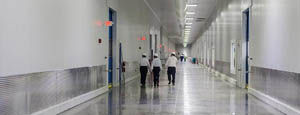
- Clean Room
Stainless steel or composite materials help maintain clean rooms.
-
-
- Coolers
Quick opening speeds & tight seals for temperature control.
-
-
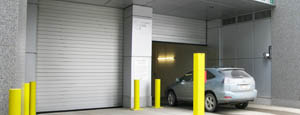
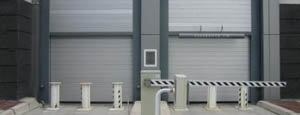
- Parking
Improve security & traffic flow and enhance architectural style.
-
-
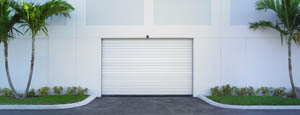
- Hurricane Zone
Withstand winds up to 175 mph and comply with the Florida Building Code.
-
-
-
-
- USDA / FDA / cGMP
Increase productivity & address stringent USDA, FDA & cGMP requirements.
-
-
- Freezers
High-speed & perimeter seals minimize the air exchange between areas.
-
-
- Security
High speed & durability ensure secure access.
-
-
- Ventilation
Perforated or screen door panels allow improved air circulation.
-
-
-
-
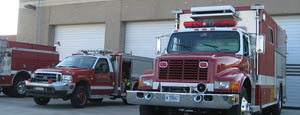
- Fire Station Emergency Response
When time is of the essence, high speed and reliability are crucial.
-
-
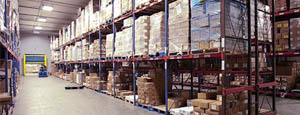
- Warehousing
Fast cycle times and secure seals keep environments separated.
-
-
- Loading Dock
Rugged design & secure seal for oversized openings.
-
-
- Large Openings
Break-away functionality with rugged design seals oversized openings.
-
-
-
-
- Heavy Equipment
Withstands challenges of heavy equipment and fleet truck/car wash environments.
-
-
- Self-Storage
Fast opening speeds and reliable, durable construction keep facilities secure and protected.
-
-
- Industries
-
-
-
- Automotive Dealerships
Reduce energy costs, increase productivity and comfort and enhance customer perception.
-
-
- Cold Storage & Processing
Increase productivity and operational efficiency while reducing energy and maintenance costs.
-
-
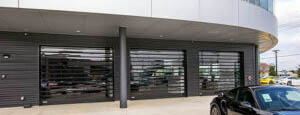
- Parking
We offer solutions for Apartment / Condo & Loft, Standalone Parking Facilities and Office Buildings
-
-
-
-
- Food & Beverage
Doors specifically engineered for USDA/FDA and cGMP environments, and assured compliance for uncompromising performance.
-
-
- Mfg/Dist/Warehousing
A complete product line allows facilities to increase efficiency and safety and reduce maintenance and energy costs.
-
-
- Government
Ensure effective security and environmental controls are maintained for critical government operations.
-
-
-
-
- Transit
Keep operations running smoothly and efficient while reducing energy and maintenance costs.
-
-
- Pharma, Nutraceutical & Biotech
Doors that offer quick, secure access, environmental control and reliability for life science facilities.
-
-
- Support Resources
- Parts
- Contact Us
- Blog/News
- Why Rytec
- Sales Rep Locator
- Careers
- Dealers
- Architectural Resources











Top 304 Stainless Steel Angle Suppliers Worldwide
Global demand for stainless steel continues to reflect construction, food processing, transportation, and industrial investment. The International Stainless Steel Forum reported approximately 58.4 million tonnes of stainless crude steel production in 2023. That volume shows the scale behind today’s supply networks, but it does not guarantee consistent product quality. Buyers still need reliable evidence.
This guide examines Top 304 Stainless Steel Angle Suppliers Worldwide through practical purchasing criteria. These criteria include grade verification, dimensional tolerance, surface finish, production capacity, export experience, and delivery performance. ASTM A276 and ASTM A479 remain important references for stainless steel bars and structural components. Supplier documentation should also include a material test certificate, heat number, chemical composition, and mechanical results. A portable PMI check can help confirm chromium and nickel content before installation. Small details matter.
The World Steel Association’s Short Range Outlook continues to identify construction and manufacturing as major drivers of steel demand. Therefore, supplier selection requires more than comparing price per kilogram. A dependable manufacturer should explain whether angles are hot rolled, laser cut, or cold formed. It should also state available sizes, corner radius, tolerances, and polishing options. Some catalogs look impressive but provide limited traceability. That weakness deserves attention. No ranking stays permanently correct, because capacity, certification, and delivery records change. This introduction offers a transparent starting point for comparing international suppliers. Readers should verify current certificates, production locations, and shipment references directly before placing substantial orders.
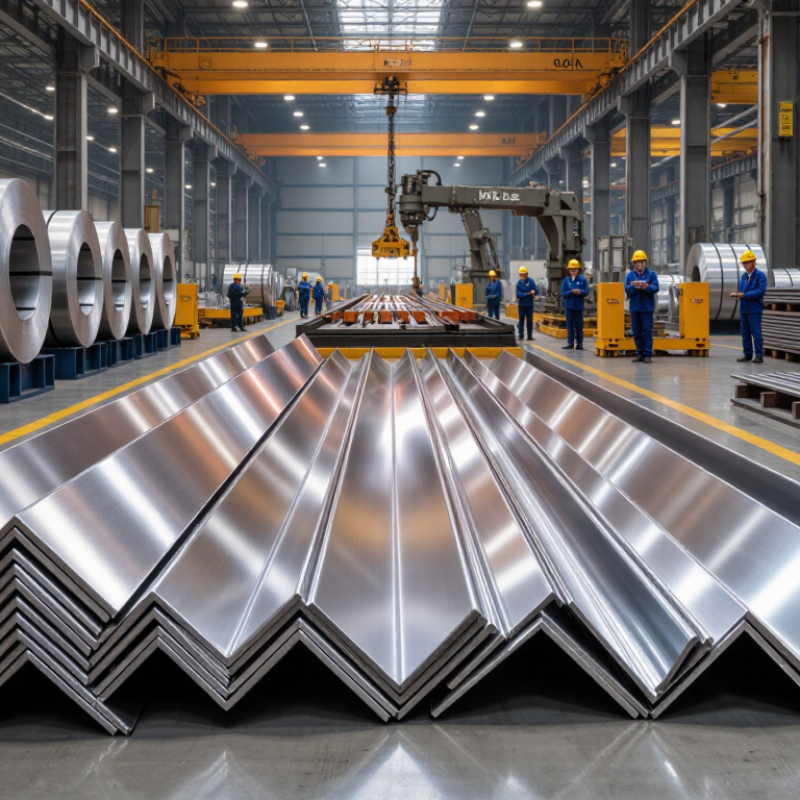
Table of Contents [Hide]
304 Stainless Steel Angle: Definition, Grades, and Key Properties
304 stainless steel angle is a structural section with two legs meeting at 90 degrees. It is usually produced by hot rolling or cold forming. The 304 grade belongs to the austenitic stainless steel family. Its typical chemistry includes chromium and nickel, which support corrosion resistance and formability. In practical sourcing, angles appear in frames, supports, equipment bases, shelving, and architectural trims. Leg length, thickness, and surface finish should match the drawing, not just the supplier’s description.
The grade offers useful resistance to moisture, oxidation, and many mild chemicals. It also welds readily and can be shaped without excessive cracking. However, 304 is not immune to corrosion. Chloride-rich water, stagnant crevices, and poor cleaning may cause staining or pitting. Common specifications include ASTM A276 for bar products and ASTM A479 for pressure-vessel components. The applicable standard depends on the angle’s use. A mill certificate should verify chemistry, dimensions, heat treatment, and test results. One detail is often missed: magnetic response can increase after cold working without proving a different grade.
Tips: Ask for the exact grade, standard, size tolerance, and surface condition. Check corners for damage and measure both legs at several points. For outdoor or coastal projects, review chloride exposure with a qualified engineer. I would not approve 304 from appearance alone. A bright surface can hide incorrect thickness or chemistry. Traceable documents matter more than confident sales language.
Top 304 Stainless Steel Angle Suppliers Worldwide - 304 Stainless Steel Angle: Definition, Grades, and Key Properties
| Data Dimension | 304 Stainless Steel Angle | Relevant Grade or Variant | Key Purchasing and Technical Considerations |
|---|---|---|---|
| Product Definition | An L-shaped structural or architectural section manufactured from austenitic stainless steel grade 304. It is available as equal-leg or unequal-leg angle and may be hot rolled, cold formed, or laser welded. | Common variants include 304, 304L, and 304H. | Confirm whether the required product is structural angle, architectural trim, or fabricated angle because manufacturing method, tolerances, and surface finish can differ. |
| Typical Chemical Composition | Chromium: 18.0–20.0%; Nickel: 8.0–10.5%; Manganese: maximum 2.0%; Silicon: maximum 1.0%; Carbon: maximum 0.08%; Iron: balance. | 304L permits carbon up to 0.03%; 304H generally requires carbon of 0.04–0.10% for elevated-temperature service. | Actual limits depend on the applicable standard, such as ASTM, EN, or JIS. Chemical composition should be checked against the material test certificate. |
| Metallurgical Structure | Austenitic stainless steel with a face-centered cubic crystal structure. It is generally non-magnetic in the annealed condition. | Cold working can increase magnetic response because deformation may produce some martensitic transformation. | Magnetism alone is not a reliable grade-identification method. Use positive material identification or certified chemical analysis when grade verification is important. |
| Minimum Tensile Strength | Typically 515 MPa under ASTM A276/A276M requirements for many 304 bar and angle products. | 304L commonly has a minimum tensile strength of approximately 485 MPa under ASTM A276/A276M, while 304H requirements may vary by product standard. | Minimum mechanical values vary with product form, thickness, heat treatment, and governing specification. |
| Minimum Yield Strength | Typically 205 MPa at 0.2% offset under ASTM A276/A276M requirements for many 304 products. | 304L commonly has a minimum yield strength of approximately 170 MPa under ASTM A276/A276M. | For load-bearing applications, design calculations should use the applicable standard and certified thickness-specific values. |
| Elongation | Typically a minimum of 40% in 50 mm for many annealed 304 products under ASTM A276/A276M. | 304L commonly provides high ductility, often with a minimum elongation of about 40%, depending on the product specification. | High ductility supports bending, forming, and fabrication, but the actual result depends on processing and test direction. |
| Density | Approximately 7.9–8.0 g/cm³, commonly calculated as about 7,930 kg/m³. | 304, 304L, and 304H have broadly similar density values. | Use the supplier’s certified mass-per-metre table for accurate shipping weight and structural calculations. |
| Elastic Modulus | Approximately 193 GPa at room temperature. | The modulus is broadly similar across the 304 family and is lower than that of typical carbon steels. | Deflection calculations should account for stainless steel’s elastic modulus rather than using carbon-steel values. |
| Thermal Conductivity | Approximately 16 W/m·K at room temperature. | Similar values apply to 304L; elevated-temperature data should be taken from the relevant design standard. | Lower thermal conductivity than carbon steel can affect welding heat flow and thermal expansion design. |
| Coefficient of Thermal Expansion | Approximately 17.2 × 10⁻⁶/K over a typical room-temperature range. | 304 and 304L generally have comparable thermal expansion behavior. | Allow for thermal movement in long angles, cladding supports, pipe racks, and outdoor assemblies. |
| Corrosion Resistance | Good general resistance to atmospheric corrosion, moisture, food-processing environments, and many mild chemicals. | 304L offers the same basic corrosion resistance as 304; 316L is normally preferred where chloride exposure is severe. | 304 is not immune to pitting or crevice corrosion in seawater, concentrated chlorides, or stagnant wet conditions. |
| Intergranular Corrosion Performance | Standard 304 can become susceptible to sensitization after prolonged exposure to approximately 450–850°C. | 304L reduces the risk because of its lower carbon content; stabilized grades such as 321 may be selected for certain high-temperature welding conditions. | 304L is often preferred for welded assemblies that will not be solution annealed after fabrication. |
| Weldability | Generally excellent with common processes including TIG, MIG, and resistance welding. | 304L is widely selected for welded construction because it reduces carbide precipitation risk. | Use suitable stainless filler metal, clean tools dedicated to stainless steel, and proper post-weld cleaning to restore corrosion resistance. |
| Formability and Machinability | Excellent cold formability, but it work-hardens rapidly during cutting, drilling, and forming. | 304L behaves similarly; cold-worked sections may show increased strength and some magnetic response. | Use sharp tooling, adequate feed rates, rigid setups, and controlled heat input during machining. |
| Common Surface Finishes | Mill finish, No. 1, 2B, No. 4 brushed, satin, polished, and bead-blasted finishes are commonly specified depending on manufacturing route. | Cold-formed or fabricated angles may require additional grinding, polishing, or passivation. | Specify surface roughness, grain direction, protective film, weld blending, and allowable visual imperfections. |
| Typical Angle Configurations | Equal-leg angle, unequal-leg angle, slotted angle, perforated angle, and custom welded angle. | Equal-leg angles are commonly used for frames and supports; unequal-leg angles are useful where one leg must provide greater bearing or attachment area. | Confirm leg length, thickness, inside radius, straightness, squareness, and cut length before ordering. |
| Applicable Product Standards | Common references include ASTM A276/A276M for stainless steel bars and shapes, ASTM A484/A484M for general requirements, and ASTM A240/A240M for stainless sheet and plate used in fabrication. | European projects may reference EN 10088; Japanese projects may reference JIS G4303 or related product standards. | The standard must match the product form. Do not assume a plate standard automatically covers a hot-rolled structural angle. |
| Dimensional Tolerances | Controlled by the selected product standard and manufacturing process; hot-rolled, cold-formed, and welded angles can have different tolerances. | Custom fabricated angles may be governed by a fabrication drawing rather than a standard rolled-shape table. | Request dimensional inspection data for leg length, thickness, angle squareness, length, radius, and straightness. |
| Common Applications | Food-processing equipment, architectural trim, handrails, tanks, hygienic frames, marine-adjacent structures, machinery guards, shelving, and general fabrication. | 304L is especially common in welded frames, vessels, and process equipment. | For high-chloride, coastal splash-zone, or chemical environments, compare 304 with 316/316L before final selection. |
| Worldwide Sourcing Regions | 304 stainless steel angles are commonly produced and distributed across Asia, Europe, North America, South America, and the Middle East. | Availability depends on section size, surface finish, standard, minimum order quantity, and whether the angle is rolled or fabricated. | Compare suppliers using the same grade designation, standard, dimensions, finish, tolerance class, certification package, and delivery terms. |
| Quality Documents to Request | Material test certificate, chemical composition, tensile and yield results, elongation, heat number, dimensional inspection report, and surface-finish details. | For welded angles, request welding procedure information, weld inspection records, and passivation or pickling documentation where applicable. | For regulated projects, also verify third-party inspection, traceability, country-of-origin documentation, and applicable compliance declarations. |
| Important Selection Limitation | 304 provides strong general-purpose corrosion resistance but may suffer pitting, crevice corrosion, or stress-corrosion cracking in aggressive chloride environments. | Consider 316L, duplex stainless steel, or a higher-alloy grade when chloride concentration, temperature, or chemical exposure exceeds 304 capability. | Final material selection should be based on exposure conditions, design loads, temperature, fabrication method, cleaning regime, and applicable engineering codes. |
Reference note Mechanical and chemical values are representative requirements or commonly used reference values. Exact limits depend on the governing material standard, product form, thickness, heat treatment, and certification requirements.