
- High-Performance Doors
-
- Applications
-
-
-
- Clean Room
Stainless steel or composite materials help maintain clean rooms.
-
-
- Coolers
Quick opening speeds & tight seals for temperature control.
-
-
- Parking
Improve security & traffic flow and enhance architectural style.
-
-
- Hurricane Zone
Withstand winds up to 175 mph and comply with the Florida Building Code.
-
-
-
-
- USDA / FDA / cGMP
Increase productivity & address stringent USDA, FDA & cGMP requirements.
-
-
- Freezers
High-speed & perimeter seals minimize the air exchange between areas.
-
-
- Security
High speed & durability ensure secure access.
-
-
- Ventilation
Perforated or screen door panels allow improved air circulation.
-
-
-
-
- Fire Station Emergency Response
When time is of the essence, high speed and reliability are crucial.
-
-
- Warehousing
Fast cycle times and secure seals keep environments separated.
-
-
- Loading Dock
Rugged design & secure seal for oversized openings.
-
-
- Large Openings
Break-away functionality with rugged design seals oversized openings.
-
-
-
-
- Heavy Equipment
Withstands challenges of heavy equipment and fleet truck/car wash environments.
-
-
- Self-Storage
Fast opening speeds and reliable, durable construction keep facilities secure and protected.
-
-
- Industries
-
-
-
- Automotive Dealerships
Reduce energy costs, increase productivity and comfort and enhance customer perception.
-
-
- Cold Storage & Processing
Increase productivity and operational efficiency while reducing energy and maintenance costs.
-
-
- Parking
We offer solutions for Apartment / Condo & Loft, Standalone Parking Facilities and Office Buildings
-
-
-
-
- Food & Beverage
Doors specifically engineered for USDA/FDA and cGMP environments, and assured compliance for uncompromising performance.
-
-
- Mfg/Dist/Warehousing
A complete product line allows facilities to increase efficiency and safety and reduce maintenance and energy costs.
-
-
- Government
Ensure effective security and environmental controls are maintained for critical government operations.
-
-
-
-
- Transit
Keep operations running smoothly and efficient while reducing energy and maintenance costs.
-
-
- Pharma, Nutraceutical & Biotech
Doors that offer quick, secure access, environmental control and reliability for life science facilities.
-
-
- Support Resources
- Parts
- Contact Us
- Blog/News
- Why Rytec
- Sales Rep Locator
- Careers
- Dealers
- Architectural Resources






















Top Rapid EV Charger Types for Global Buyers?
Choosing a Rapid Ev Charger for international deployment requires more than comparing peak power ratings. Buyers must examine vehicle compatibility, grid capacity, connector standards, installation conditions, and long-term maintenance. A 60 kW unit may suit a small urban site, while a 240 kW system may serve highway traffic more effectively. However, higher output can increase utility upgrades and operating costs.
This guide introduces the leading rapid charger types used by global buyers. It considers DC fast chargers, modular power systems, liquid-cooled units, and compact commercial models. Each type offers practical advantages in different environments. Fleets may value predictable charging schedules. Retail sites may prioritize uptime and easy payment integration. Highway operators often need strong thermal management and reliable cable handling.
Speed matters. Reliability matters more.
Technical decisions should follow local electrical requirements, recognized safety certifications, and the vehicle brands visiting each site. Experienced installers also check cable length, weather protection, emergency controls, communication protocols, and spare-part availability. These details can determine whether a charger performs well after months of daily use.
No charger wins everywhere. That assumption often fails.
Field experience shows that real charging performance depends on temperature, battery condition, queue management, and available grid power. Buyers should request test data, warranty terms, service response times, and references from comparable projects. Some specifications look impressive on paper but provide limited value in crowded locations. A careful evaluation can reduce downtime, protect investment, and support safer charging operations across different markets.
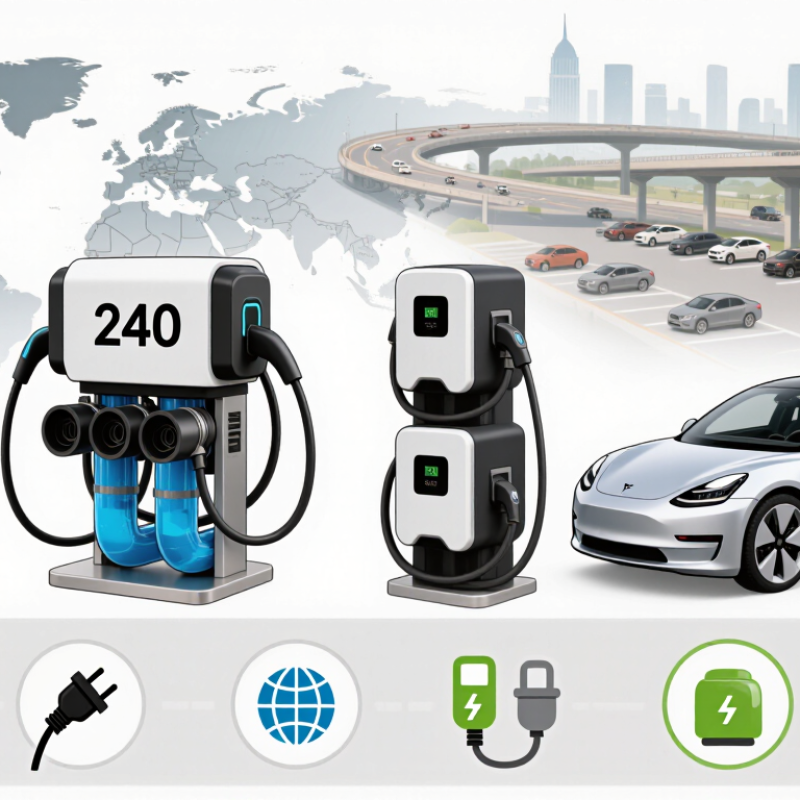
Table of Contents [Hide]
Rapid EV Charging: Core Concepts and Global Classification
Rapid EV charging means delivering high electrical power while protecting the battery, grid, and driver. The core concept is simple: charging speed depends on power, battery capacity, temperature, and state of charge. A 150 kW charger will not always deliver 150 kW. Power usually declines as the battery approaches full capacity.
Global classification uses several practical layers. AC chargers commonly serve homes, workplaces, and long parking periods. DC rapid chargers convert electricity outside the vehicle and usually support much shorter stops. Many international projects classify DC equipment below 50 kW as fast, 50–149 kW as rapid, and 150 kW or higher as ultra-rapid. These ranges are useful, but not perfectly consistent across markets. Connector standards, communication protocols, voltage, cooling design, and local grid limits also shape real performance. The IEA’s Global EV Outlook 2024 reported more than four million public charging points worldwide at the end of 2023. It also recorded about 60% growth in public chargers rated at 150 kW or above.
Tips: Global buyers should compare delivered energy, not only nameplate power. Check peak output, charging curves, cable length, operating temperature, payment systems, and service coverage. A smaller charger may perform better at a constrained site. Site testing remains essential.
One detail is often overlooked. High-power equipment can create demand peaks, especially at busy depots. Load management, battery storage, and reliable grid studies may matter more than an impressive power rating. Standards help, yet field conditions still decide the user experience.