



















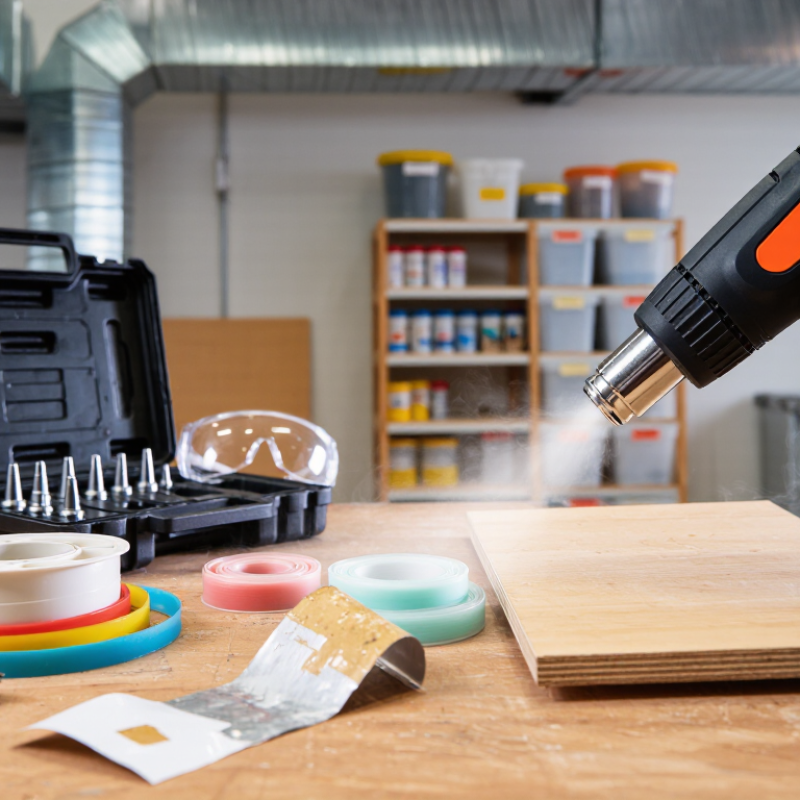
A heat gun directs very hot air onto a small area, so nearby materials can ignite before they look damaged. Work in a clear, well-ventilated space, away from curtains, paper, solvents, and other flammables. Wear safety glasses and heat-resistant gloves. Keep the tool moving; holding it still can scorch wood or start a fire. The danger is real. Never point the nozzle at yourself, another person, or a sealed container.
Avoid heating lead-painted surfaces, PVC, polystyrene foam, and unknown plastics. They may release hazardous fumes or melt unpredictably. Don’t use a heat gun near fuel, aerosol cans, or exposed wiring. Glass can crack from sudden temperature changes, so use heat only when the material’s instructions allow it. Check the workpiece before starting; I’ve found that an innocent-looking coating can be the part that causes trouble. Let the tool cool on a stable, heat-resistant surface, then unplug it.
Tips: Start with a low setting and test a hidden spot. Keep a fire extinguisher within reach, and stop if you notice smoke, unusual odors, or softening material. Ventilation helps, but it does not make every material safe to heat.