
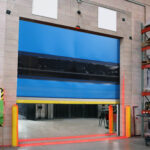
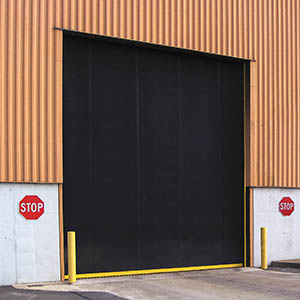
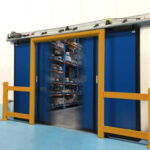
- High-Performance Doors
-
- Applications
-
-
-
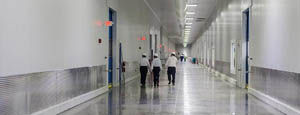
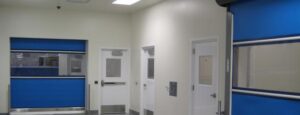
- Clean Room
Stainless steel or composite materials help maintain clean rooms.
-
-
- Coolers
Quick opening speeds & tight seals for temperature control.
-
-
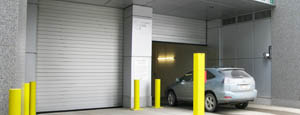
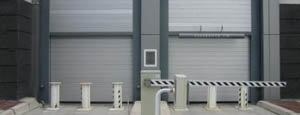
- Parking
Improve security & traffic flow and enhance architectural style.
-
-
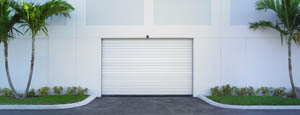
- Hurricane Zone
Withstand winds up to 175 mph and comply with the Florida Building Code.
-
-
-
-
- USDA / FDA / cGMP
Increase productivity & address stringent USDA, FDA & cGMP requirements.
-
-
- Freezers
High-speed & perimeter seals minimize the air exchange between areas.
-
-
- Security
High speed & durability ensure secure access.
-
-
- Ventilation
Perforated or screen door panels allow improved air circulation.
-
-
-
-
- Fire Station Emergency Response
When time is of the essence, high speed and reliability are crucial.
-
-
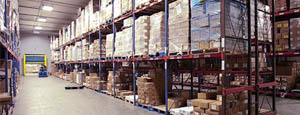
- Warehousing
Fast cycle times and secure seals keep environments separated.
-
-
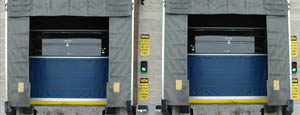
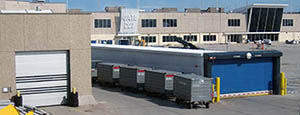
- Loading Dock
Rugged design & secure seal for oversized openings.
-
-
- Large Openings
Break-away functionality with rugged design seals oversized openings.
-
-
-
-
- Heavy Equipment
Withstands challenges of heavy equipment and fleet truck/car wash environments.
-
-
- Self-Storage
Fast opening speeds and reliable, durable construction keep facilities secure and protected.
-
-
- Industries
-
-
-
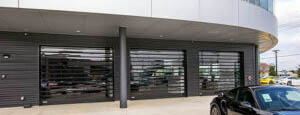
- Automotive Dealerships
Reduce energy costs, increase productivity and comfort and enhance customer perception.
-
-
- Cold Storage & Processing
Increase productivity and operational efficiency while reducing energy and maintenance costs.
-
-
- Parking
We offer solutions for Apartment / Condo & Loft, Standalone Parking Facilities and Office Buildings
-
-
-
-
- Food & Beverage
Doors specifically engineered for USDA/FDA and cGMP environments, and assured compliance for uncompromising performance.
-
-
- Mfg/Dist/Warehousing
A complete product line allows facilities to increase efficiency and safety and reduce maintenance and energy costs.
-
-
- Government
Ensure effective security and environmental controls are maintained for critical government operations.
-
-
-
-
- Transit
Keep operations running smoothly and efficient while reducing energy and maintenance costs.
-
-
- Pharma, Nutraceutical & Biotech
Doors that offer quick, secure access, environmental control and reliability for life science facilities.
-
-
- Support Resources
- Parts
- Contact Us
- Blog/News
- Why Rytec
- Sales Rep Locator
- Careers
- Dealers
- Architectural Resources












Why Choose Thermal Break Aluminium for Global Projects?
Why Choose Thermal Break Aluminium for Global Projects?
Global construction is facing a measurable energy challenge. The 2023 Global Status Report for Buildings and Construction, published by UNEP and the GlobalABC, states that buildings consume about 30% of global final energy. They also produce roughly 26% of energy-related emissions. These figures make façade performance more than a design preference. It becomes a project responsibility.
Thermal Break Aluminium helps reduce heat transfer through aluminium frames. An insulating polyamide strip separates the inner and outer metal sections. This detail can improve frame U-values and reduce interior surface condensation. It also supports more stable indoor temperatures beside windows and doors. That matters in a glass façade exposed to winter winds or intense summer sun. The International Energy Agency highlights improved building envelopes as a practical route to lower energy demand. Thermal Break Aluminium fits that direction when it is properly engineered.
Performance depends on the whole system. Glazing, gaskets, fasteners, drainage, and installation quality all matter. A strong frame cannot correct poor site sealing. It is not magic. Regional standards also vary, so one specification may fail elsewhere. Designers should verify thermal calculations, air tightness, water resistance, and condensation risks. The Passive House Institute and ISO-based testing methods provide useful benchmarks for this process. Material selection should also consider recycled content and product durability. Aluminium offers long service life, but its embodied carbon requires honest assessment. Choosing Thermal Break Aluminium is therefore not simply choosing a frame. It is choosing a tested envelope strategy, with room for careful review.
Table of Contents [Hide]
What Thermal Break Aluminium Is and How It Works
Thermal break aluminium uses a low-conductivity polyamide strip between two aluminium profiles. The strip interrupts the metal path that normally transfers outdoor cold indoors. It also reduces heat loss around window frames and doors. The principle is simple. The detailing is not.
Aluminium remains strong, slim, and stable, while the insulated barrier improves frame performance. On a winter site, interior frame surfaces feel less cold. Condensation risk may also decrease when indoor humidity is controlled. However, the frame alone cannot guarantee comfort. Glass selection, gaskets, spacers, installation gaps, and drainage matter equally. Uneven strips or compressed seals can quietly weaken performance.
The United Nations Environment Programme reported in its 2023 Global Status Report that buildings consume about 34% of global energy and produce approximately 37% of energy-related emissions. This pressure makes envelope design increasingly important. Project teams should compare tested U-values, not marketing estimates. For reference, Passive House window targets often use a whole-window Uw value near 0.8 W/m²K, depending on climate and certification details. That figure is not universal.
Thermal imaging can reveal cold corners after installation. Site measurements are worth the effort. Yet thermal breaks are not magic. Poor alignment, missing insulation, or unsuitable glass can still create uncomfortable interiors. Different climates need different profiles, and imported specifications may require careful local review.
Why Choose Thermal Break Aluminium for Global Projects? - What Thermal Break Aluminium Is and How It Works
| Data Dimension | Thermal Break Aluminium | Non-Thermal-Break Aluminium | Project Relevance |
|---|---|---|---|
| Basic Construction | Two aluminium sections are connected by a low-conductivity insulating strip, commonly reinforced polyamide. | Interior and exterior aluminium sections form a continuous metal path. | The insulating strip interrupts direct heat flow through the frame. |
| How the Thermal Break Works | The insulating separator reduces conductive heat transfer and helps move the internal surface temperature closer to room temperature. | Aluminium provides a continuous heat-conductive path between indoors and outdoors. | Lower heat flow can improve energy performance and indoor comfort when the complete window or façade is properly designed. |
| Thermal Conductivity of Main Materials | Aluminium is typically about 160–205 W/m·K; glass-fibre-reinforced polyamide used as a thermal separator is commonly about 0.20–0.35 W/m·K. | Aluminium is typically about 160–205 W/m·K throughout the frame section. | The large difference in conductivity explains why the separator reduces heat transfer through the frame. |
| Typical Frame Uf Value | Approximately 1.5–2.5 W/m²·K for many thermally improved aluminium systems. | Approximately 5.0–7.0 W/m²·K for many basic aluminium systems. | Lower Uf values indicate lower heat flow through the frame. Actual values depend on geometry, inserts, dimensions and calculation method. |
| Whole-Window Uw Value | Often approximately 0.8–1.8 W/m²·K when combined with suitable insulating glazing and warm-edge spacers. | Often approximately 2.0–3.5 W/m²·K with similar glazing, depending on frame proportion and design. | Uw is a whole-product value; it should not be confused with the frame-only Uf value. |
| Condensation Risk | Generally lower at the interior frame surface because the thermal barrier improves the internal surface temperature. | Generally higher in cold climates or high-humidity interiors because the inner frame can become colder. | Condensation performance still depends on indoor humidity, outdoor temperature, glazing, installation and ventilation. |
| Energy Performance | Can reduce conductive heat loss in heating-dominated buildings and reduce unwanted heat gain in cooling-dominated buildings. | More heat can pass through the frame, increasing the thermal load on the building envelope. | The final energy impact depends on window area, orientation, glazing, shading, air leakage and local climate. |
| Structural Capability | Retains aluminium’s high strength-to-weight characteristics while adding thermal separation between frame sections. | Provides strong, lightweight framing but without a dedicated thermal separation layer. | Suitable design allows large openings, curtain walls, doors and façades while supporting project-specific wind and span requirements. |
| Weather and Air Tightness | Can achieve high water and air performance when combined with correctly designed seals, drainage paths and fabrication. | Can also achieve good weather performance, but thermal performance remains limited by the continuous metal path. | Air leakage and water resistance are system and installation properties, not determined by the thermal break alone. |
| Fire and Material Considerations | Aluminium remains non-combustible as a metal; the polymer separator must be evaluated as part of the complete tested assembly. | The frame is primarily aluminium, with no polymer thermal separator in the metal path. | Fire classification and compliance must be checked for the complete façade or window assembly under the applicable local regulations. |
| Acoustic Performance | Can support strong sound insulation when paired with suitable laminated or insulating glass, seals and installation details. | Acoustic performance is also mainly influenced by glazing, seals, frame configuration and installation quality. | The thermal break itself is not a standalone acoustic rating; project requirements should use tested whole-product data. |
| Durability and Corrosion Protection | Aluminium frames can provide long service life when finishes, drainage, fasteners and interfaces are correctly specified and maintained. | Similar aluminium durability is possible, but exposure conditions still require appropriate coating, anodising or other protection. | Specify finishes and corrosion categories according to coastal, industrial, humid or high-UV exposure conditions. |
| Climate Suitability | Suitable for cold, hot, mixed and humid climates when the frame, glazing, shading and seals are selected for the local design conditions. | May be acceptable where thermal requirements are limited, but can be less suitable for high-performance envelopes. | Climate-specific modelling should consider heating degree days, cooling degree days, solar exposure and indoor humidity. |
| Typical Applications | High-performance windows, doors, curtain walls, unitized façades, skylights and ventilated façade systems. | Interior partitions, low-thermal-demand applications and projects where frame thermal performance is not a primary requirement. | Selection should be based on the project’s energy code, envelope targets, dimensions, exposure and lifecycle objectives. |
| Verification Data to Request | Frame Uf, whole-window Uw, solar factor, air permeability, watertightness, wind resistance and acoustic test results. | The same performance data should be requested, although thermal values are commonly higher. | Use independently calculated or tested values for the exact profile, glazing, hardware, dimensions and installation conditions. |
Note: The numerical ranges are typical indicative values rather than guaranteed product ratings. Final performance should be verified using project-specific calculations or tests in accordance with applicable standards such as EN ISO 10077-2, EN 14351-1, ASTM C1363 or relevant local requirements.